
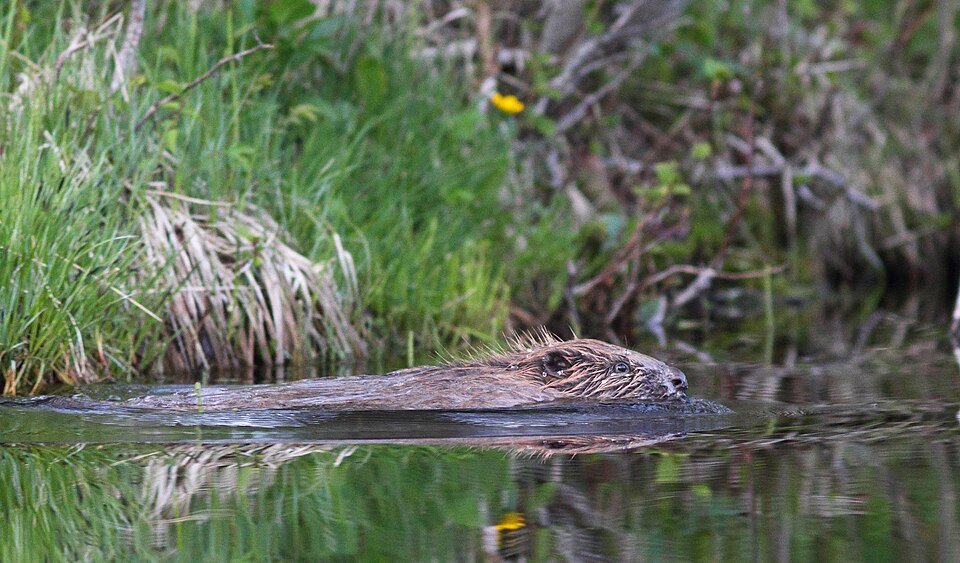
Photo credit: Bohuš Číčel. CC BY-SA 3.0, via Wikimedia Commons
Unsurprisingly beavers are hugely popular within our network, with many members keen to see the return of beavers to both their own land holding and the wider landscape. We decided we’d need two visits to the beaver enclosure at Eligro Nature Reserve, so on April 29th and May 6th different groups of members headed to Llangorse, in the heart of the Brecon Beacons National Park, to learn more about their impact on habitats, see their effects and hopefully to see the beavers themselves.
We enjoyed a fascinating talk on beaver ecology and the history of the beavers at Eligro, by beaver expert Alicia Leow-Dyke, the Wildlife Trusts Wales (WTW) Welsh Beaver Project Officer. It was wonderful to see the trail-cam videos of the beavers and the other wildlife visiting the pond enclosure. The beavers were delightful and comical, taking carrots from the feeding area, struggling to hold as many as possible in their mouths and paws while walking and swimming. Both adults and young were playful and appeared to be gentle, fun loving creatures. It was heart-warming to hear how young born in this enclosure have become part of wild and captive releases elsewhere in the country.
After the talk, we headed across the farm and walked down though meadows grazed by horses, to the large pond and woodland which houses the beaver enclosure.
The first surprise was its small size - initial euphoria at how achievable this would be was quashed as we learned the rules have changed, this one acre enclosure would no longer be permitted for a captive release. New requirements means the minimum size for an enclosure is around 3 acres - which presents a considerable cost barrier for all those looking to help the species recover and return to wetland landscapes.
We quietly entered the hide and began to wait - dusk fell, shadows deepened but no beavers appeared. Sadly, we didn’t see the beavers during our visits, but we know they are there and that will have to be enough for us for now.
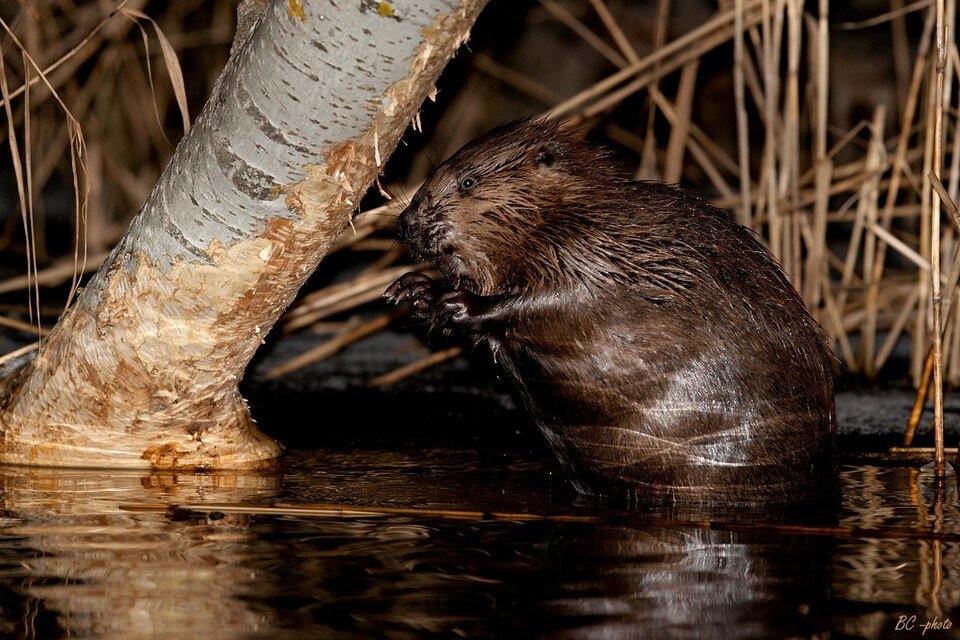
Photo credit: Bohuš Číčel. CC BY-SA 3.0, via Wikimedia Commons
Slowly, painfully slowly, beavers are returning to the UK landscape. The urgency of climate change makes beaver return even more important because beavers create healthy wetlands which can help mitigate the effects of climate change induced flooding and drought. In the UK, especially in farmed landscapes, they are a much needed. They were lost long ago, through over hunting - not because they caused problems - but because their population was so useful, so many products were made from beavers, their fur, meat and scent glands, they were unsustainably exploited, until every last one of them was dead.
Beavers are officially recognized as a native species and the UK government has a legal duty to restore and protect UK biodiversity, so surely it shouldn’t be up to charities and individuals to restore them to the landscape? Where is the government support for beaver and wetland restoration? Wild release licenses whilst now possible are hugely expensive and difficult to achieve, senseless barriers to the return of a species which we desperately need.
Sadly a recent survey of the River Wye catchment showed there re no beavers in the Wye catchment, and as it is a large catchment, experts from the Beaver Trust do not think wild colonization is likely. Reintroduction will be necessary to return beavers to this landscape. We are developing a project to help us work with members to improve habitats for beavers, so we are ready for their return and hope to work with Gloucester Wildlife Trust to support their work to reintroduce beavers. Watch this space for more news!
