
Visit to The Leen
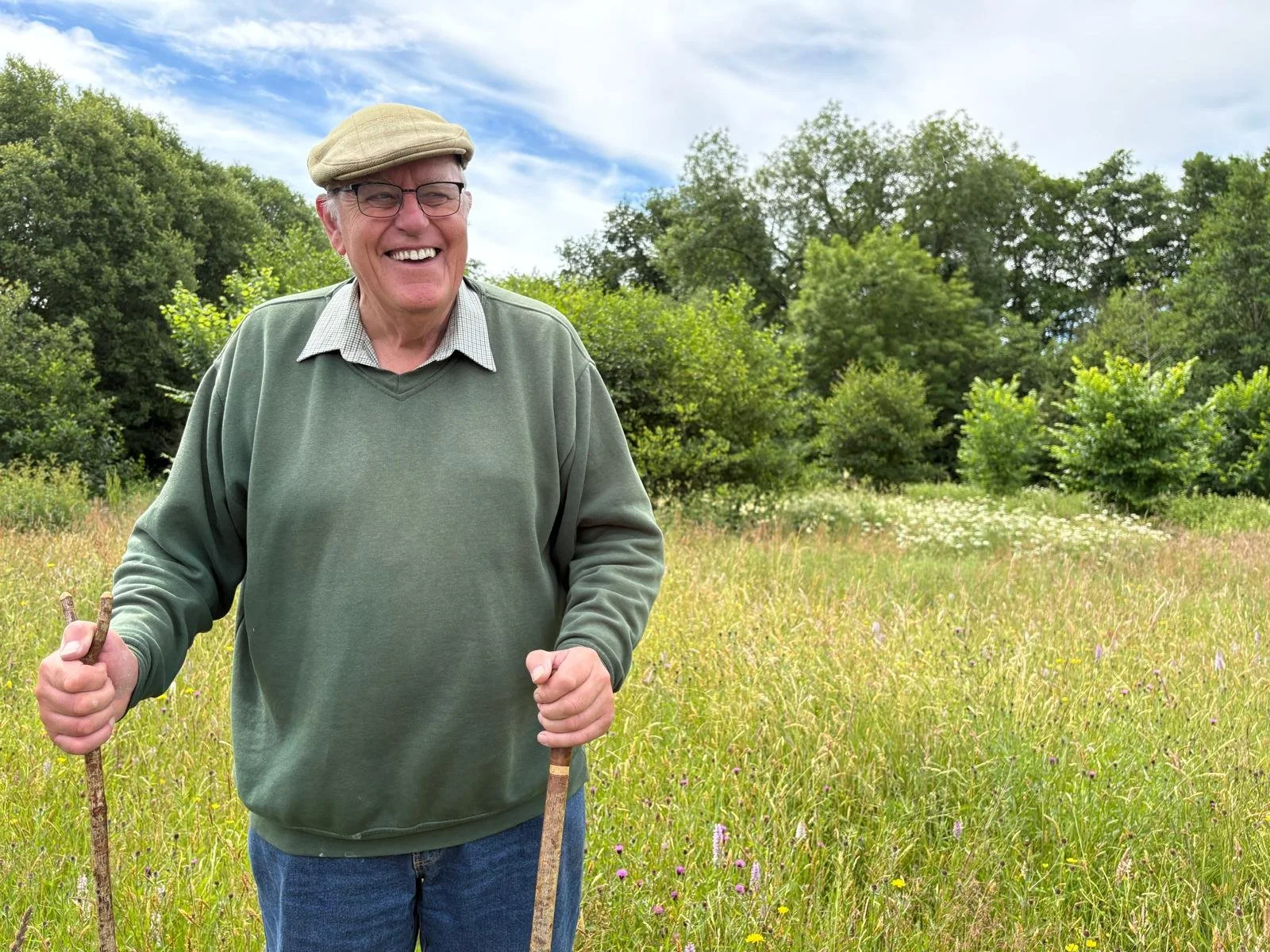
Tony Norman in the orchid rich meadows between the SSSI and the productive pastures
Our visit to The Leen was fascinating. Fourteen members enjoyed a tour of this award winning dairy farm, managed by WVW member Tony Norman. We drove in convoy along the old railway line which the cattle follow each day to reach the pastures, and stopped in a grass field to admire the Black poplars which Tony has been planting on the farm. This iconic floodplain tree is one of Britain’s rarest timber trees. They are large charismatic trees, with deeply fissured bark, knobbly 'bosses' on their trunks and spreading branches which often touch the ground, before sweeping upwards again in a mass of twigs. They were once common on floodplains and along ditches and formed an important part of our landscape and culture for centuries, inspiring the famous painter, Constable, being important landmarks and providing timber. Drainage of land for agricultural has made it difficult for these wetland trees and they have slowly disappeared from the landscape.
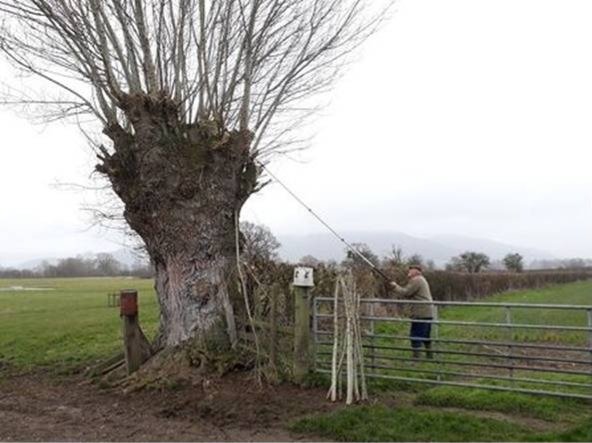
Tony selecting shoots from a black poplar pollard for 'truncheons' © Herefordshire Wildlife Trust.
Tony is the coordinator of the Herefordshire Black Poplar project, a dedicated group of people who have been mapping the remaining Black poplars in the landscape, taking cuttings from these trees and replanting them to secure their survival and return to the landscape. Over the last three decades, Tony Norman and local tree wardens have mapped around 150 veteran Black poplar trees and distributed over 2,000 cuttings across more than 120 county parishes.
Tony has available rooted NBP cuttings in pots (male and female) and also NBP truncheons (large cuttings), available to people for a donation to the Herefordshire Black Poplar project. If you are interested please contact Tony directly: tony@theleen.co.uk
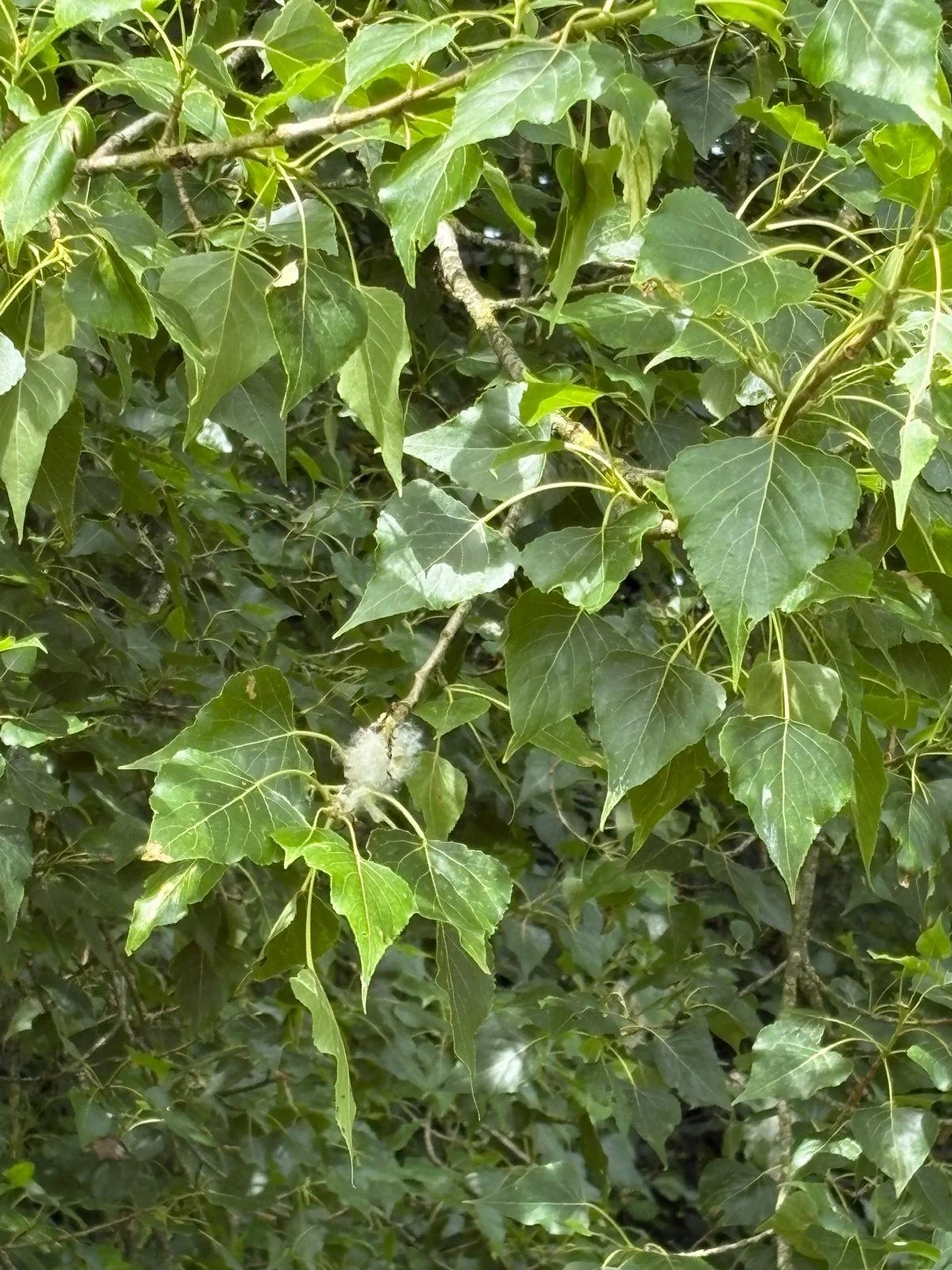
Black poplar close up.
Bringing our attention back to the field itself, Tony described the meticulous grassland management, the weekly measuring of grass length and growth rate which enables his sons to plan exactly where the 550 strong herd of Jersey x New Zealand Friesians will graze. The cattle are “mob grazed”, spending just one day in each field before moving on to pastures new. This rotational grazing enables grass growth to be maximized, each field is visited when the grass is at optimum length and can provide maximum food for the herd. This careful grassland management and regular silage harvests enables the herd to be almost entirely grass fed.
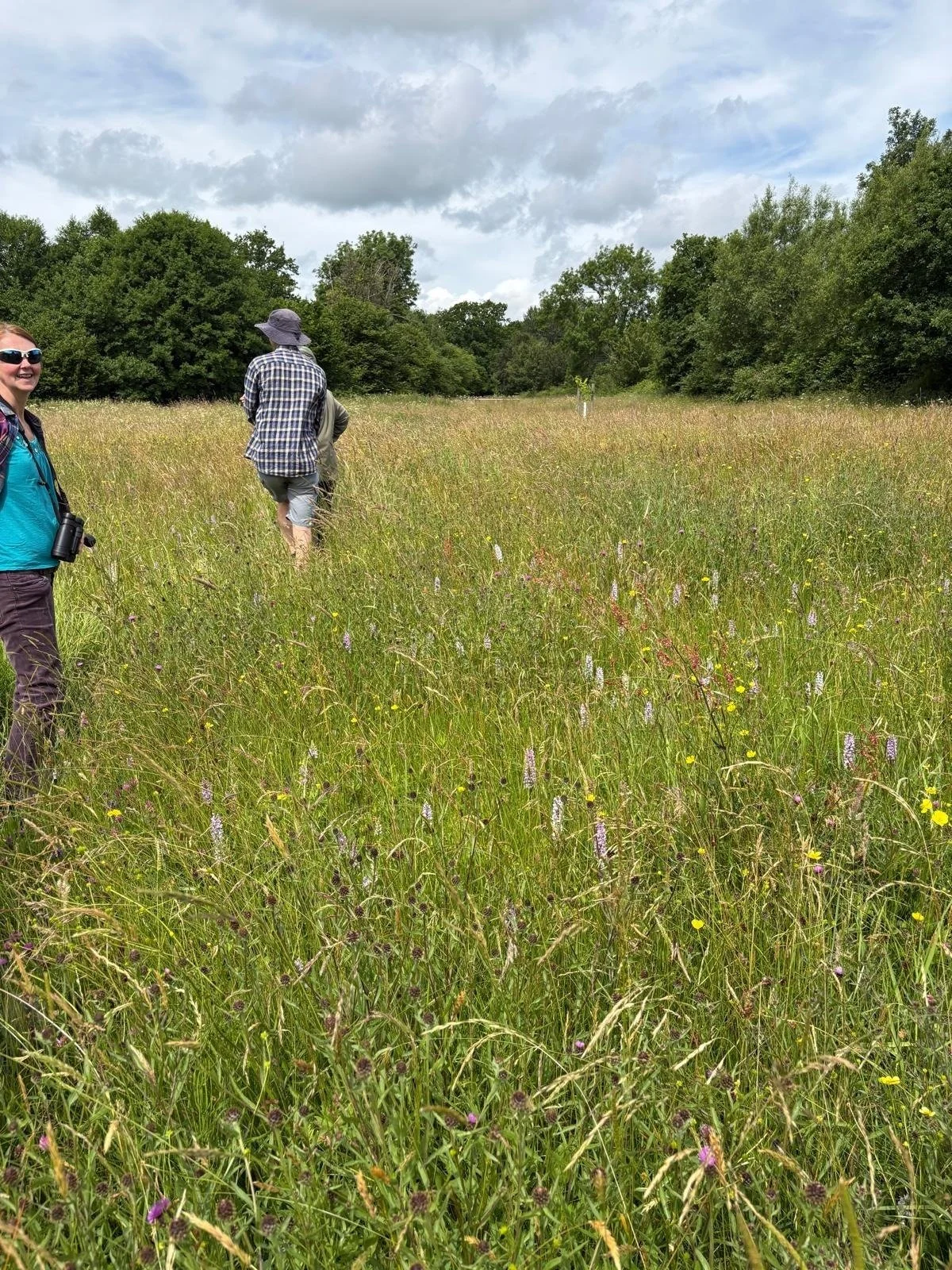
Trying not to step on the abundant Common Spotted Orchids
From these productive grasslands (12t of Dry Matter per ha) we walked into the conservation focused meadows (4t DM per ha), which were beautiful and filled with Oxeye Daisy (Leucanthemum vulgare), Meadow Buttercup (Ranunculus acris), Common Knapweed (Centaurea nigra), Lady's Bedstraw (Galium verum), Bird's-foot-trefoil (Lotus corniculatus) and Yellow Rattle (Rhinanthus minor). It was very interesting to hear Tony’s experiments with these meadows, one having been left to develop naturally from the seed-bank in the soil, the other reseeded with wildflowers, and to see that there was little difference between the meadows, as the diversity of the seed-bank meadow had increased naturally when the hay cutting date was pushed back from Mid June into mid July.
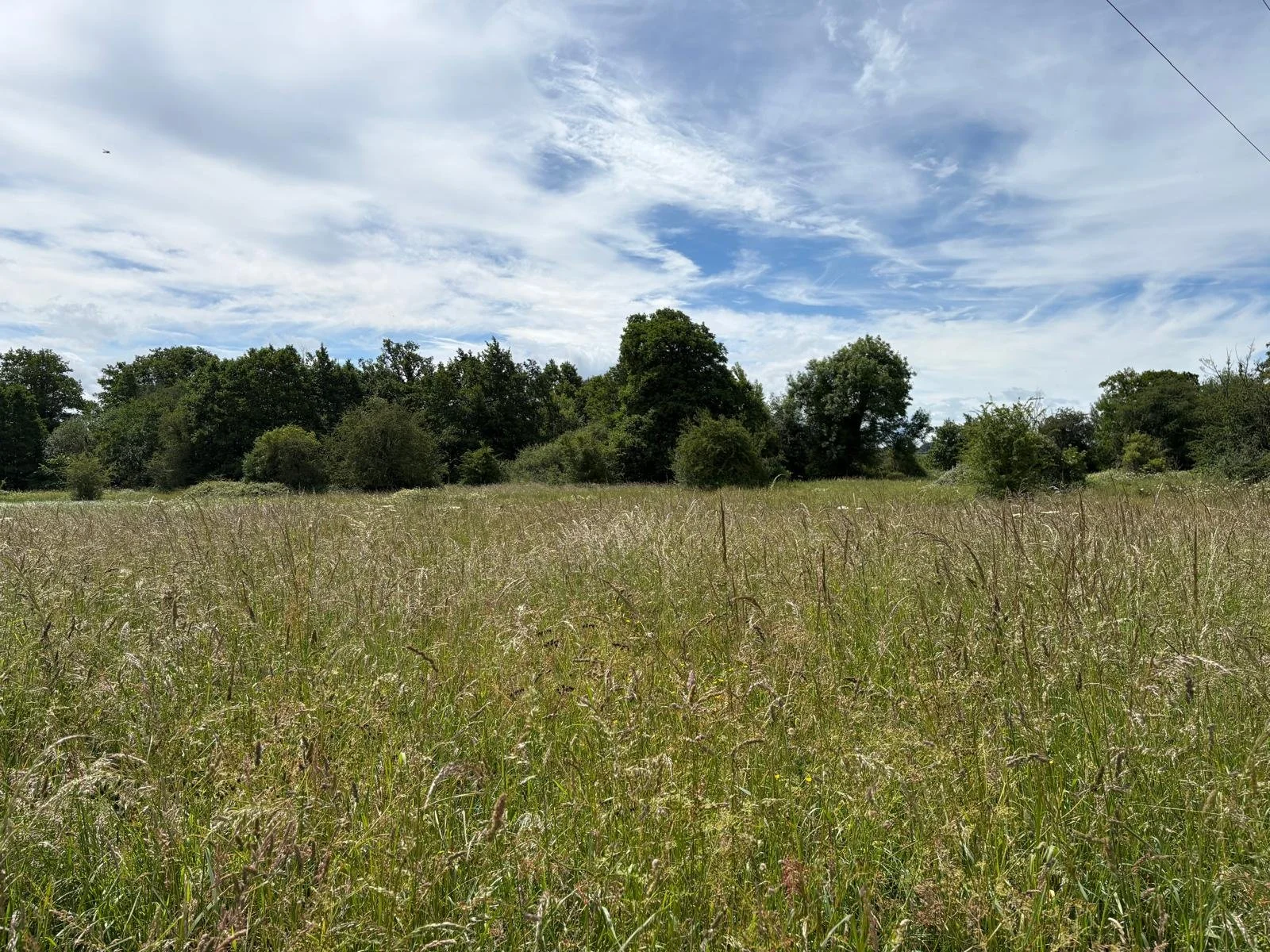
Looking across the SSSI wetland at The Leen
The wildflower meadows have been developed in order to buffer the wetland SSSI on the farm, as we walked into the damp meadows adjacent to the SSSI everyone was taken aback by the incredible abundance of Common Spotted-orchid (Dactylorhiza fuchsii), we struggled to pick our path through the meadow to avoid stepping on them! The SSSI is Moseley Common, one of the few areas of marshland in Herefordshire to have survived the effects of modern agricultural improvement and drainage. It is designated for its flora, over 200 plants have been recorded, including several species now rare or uncommon in the county. As we admired the wetlands, numerous species of damsel and dragonflies moved overhead. I am always humbled by the beauty and abundant diversity of life in ‘wild places’ where Nature is not diminished by our actions. At the Leen this seemed all the more remarkable, for the contrast between the grasslands drained and managed to feed cattle, and the diversity of native grasslands and wetlands, existing together, side by side was astonishing.
The co-existence of the wild and the farmed at The Leen, is testament to both nature’s inherent resilience and human ingenuity. We have a remarkable ability to control land and make it productive and a capacity to care for nature and enable it to thrive - even within productive landscapes. It is Tony’s deep love of nature that makes the Leen such a special place and home to so much wildlife. We are very grateful to Tony for his time and expertise, answering all of our questions and showing us around the farm with such openness and honesty.
