
Managing Grasslands for Invertebrates
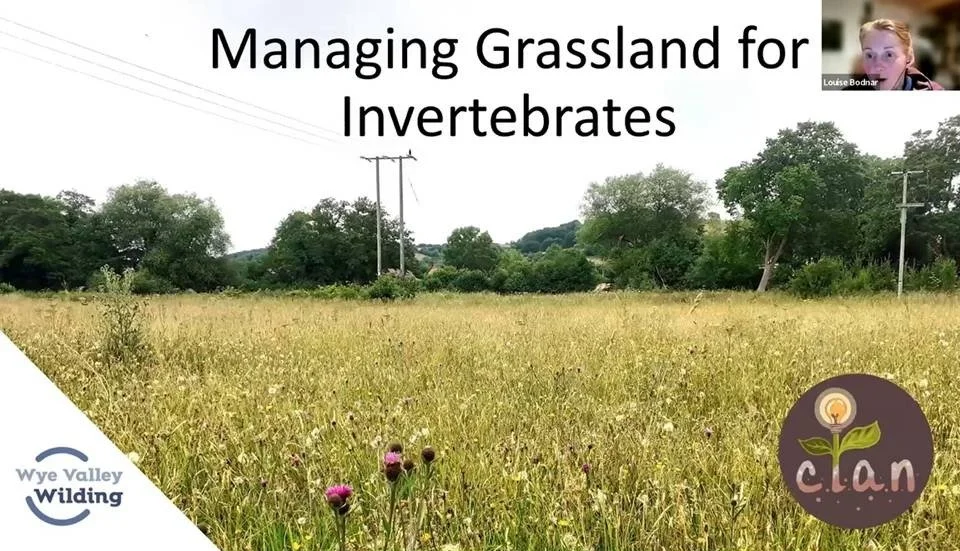
On the 10th of February we had Tim Kaye local ecologist and director of Community Learning and Nature (CLaN) talk about Managing Grasslands for Invertebrates. We had 26 members join us for the webinar, but if you missed it, you can view it on the Wye Valley Wilding YouTube channel.
The key points for managing grasslands for invertebrates are:
Insects go through many metamorphosis as they grow, so management must consider egg laying habitat, plants which larvae feed on, and the flowering plants the adults feed on.
Retain scattered trees and shrubs around and within grasslands.
Retain deadwood within meadows, most of the UK’s rarest insects require deadwood.
Retain ant hills, don’t flatten , mow or over graze them.
If hay cutting, leave strips in the center of the field or leave wide edges.
Vary the topography. Higher areas will drier and hotter and suit different species than low lying wetter areas, bare earth patches are also utilized by many insect species, including solitary bees.
Vary the sward structure, so it contains both long and short vegetation to maximize the habitat niches and number of insects it can support.
Low intensity grazing can be very beneficial to create varied topography and sward structure, and provide dung for invertebrates, but requires careful balance to prevent over grazing.
Avoid use of chemical herbicides, fungicides and insecticides!
